Fermented black beans (tausi)
Definition:
These are not the black beans you'll find in Mexican cooking. Fermented black beans (also called salted or dried black beans) are made from soybeans that have been dried and fermented with salt; other spices such as chilies and/or wine and possibly ginger may be added. Because of their strong flavor, fermented black beans are frequently paired with other strong seasonings, such as garlic and chilies. They make a frequent appearance in Cantonese cooking; you’ll find them in dishes such as Shrimp With Lobster Sauce. Fermented black beans are normally rinsed before being used in cooking; otherwise, they will impart too much of a salty flavor to the dish. Often you’ll find recipes calling for the beans to be mashed with garlic.
Fermented black beans are sold in plastic bags in Asian markets. At home, remove the beans from the package and store in a sealed container in a cool, dark place. The beans will last for several months. You can also find fermented black beans sold in jars - these can be used instead if necessary but they don't have as much flavor.
If you don’t live near an Asian market, premade black bean sauce is often available in the international or ethnic section of many supermarkets. You can also purchase both fermented black beans and premade black bean sauce at several online stores specializing in Asian ingredients.
Info : http://chinesefood.about.com
Wednesday, July 17, 2013
Tuesday, February 26, 2013
Salted duck egg
A salted duck egg is a Chinese preserved food product made by soaking duck eggs in brine, or packing each egg in damp, salted charcoal. In Asian supermarkets, these eggs are sometimes sold covered in a thick layer of salted charcoal paste. The eggs may also be sold with the salted paste removed, wrapped in plastic, and vacuum packed. From the salt curing process, the salted duck eggs have a briny aroma, a very liquid egg white and a firm-textured, round yolk that is bright orange-red in colour.
Salted duck eggs are normally boiled or steamed before being peeled and eaten as a condiment to congee or cooked with other foods as a flavouring. The egg white has a sharp, salty taste. The orange red yolk is rich, fatty, and less salty. The yolk is prized and is used in Chinese mooncakes to symbolize the moon.
Despite its name, salted duck eggs can also be made from chicken eggs, though the taste and texture will be somewhat different, and the egg yolk will be less rich.
Salted eggs sold in the Philippines undergo a similar curing process, with some variation in ingredients used. They are dyed red to distinguish them from fresh duck eggs.
Production
Pateros method
A popular method for processing salted eggs in the Philippines is the Pateros method. The salted egg is prepared "Pateros style" by mixing clay (from ant hills or termite mounds), table salt and water in the ratio of 1:1:2 until the texture of the admixture becomes smooth and forms a thick texture similar to cake batter. The fresh eggs are individually dipped in the admixture, and packed in 150-egg batches in newspaper-lined 10x12x18 inch wooden boxes (often residual boxes of dried fish packing). The whole batch is then lightly wrapped in newspapers to slow down the dehydration process.
The eggs are then stored indoors at room temperature over the next 12 to 14 days to cure. This way the salt equilibrates in the batch by osmosis. Curing can last up to 18 days, but that results in very long-lasting red eggs that can have a 40-day shelf life, which is largely unnecessary, as the eggs are stocked and replenished biweekly.
After the two-week curing period, the eggs are hand-cleaned with water and a brush and prepared to be boiled in low heat for 30 minutes. Time is measured from the first moment the water boils and the immersion of the eggs. The 50-egg batch is then wrapped in fish nets for ease of removal from the cookware. The cookware must be large enough to accommodate the batch with a two-inch covering of water.
Chicken eggs may be processed the same way, although up to 10% of the batch can break during the process.
Cholesterol content
According to the Health Promotion Board of Singapore, one salted duck egg yolk weighing about 100 g contains 425 mg of cholesterol.[1] The recommended cholesterol intake for a healthy diet should be less than 300 mg a day.[citation needed] A single salted egg yolk exceeds the recommended cholesterol intake, and if eaten regularly, there might be a greater risk of elevating blood cholesterol level. However, there has been recent controversy among health experts, some of whom have changed their position to de-emphasize the importance of dietary cholesterol on blood cholesterol levels, in light of the large degree of self-regulation of dietary and blood cholesterol played by the liver, and the notion that blood cholesterol is a good but imperfect indicator rather than a causative factor of cardiovascular issues.
Info : Wikipedia
Wednesday, February 6, 2013
Mooncake
Mooncake (simplified Chinese: 月饼; traditional Chinese: 月餅; pinyin: yuè bĭng) is a Chinese bakery product traditionally eaten during the Mid-Autumn Festival (Zhongqiu). The festival is for lunar worship and moon watching, when mooncakes are regarded as an indispensable delicacy. Mooncakes are offered between friends or on family gatherings while celebrating the festival. The Mid-Autumn Festival is one of the four most important Chinese festivals.
Typical mooncakes are round or rectangular pastries, measuring about 10 cm in diameter and 4–5 cm thick. This is the Cantonese mooncake, eaten in southern China (Guangdong, Hong Kong). A rich thick filling usually made from red bean or lotus seed paste is surrounded by a thin (2–3 mm) crust and may contain yolks from salted duck eggs. Mooncakes are usually eaten in small wedges accompanied by Chinese tea. Today, it is customary for businessmen and families to present them to their clients or relatives as presents,[1] helping to fuel a demand for high-end mooncake styles. The caloric content of a mooncake is approximately 1,000 calories (for a cake measuring 10 centimetres (3.9 in), but energy content varies with filling and size.
General description
Most mooncakes consist of a thin, tender pastry skin enveloping a sweet, dense filling, and may contain one or more whole salted egg yolks in their center to symbolize the full moon. Very rarely, mooncakes are also served steamed or fried.
Traditional mooncakes have an imprint on top consisting of the Chinese characters for "longevity" or "harmony", as well as the name of the bakery and the filling inside. Imprints of the moon, the Lady Chang'e on the moon, flowers, vines, or a rabbit (symbol of the moon) may surround the characters for additional decoration.
Mooncakes are considered a delicacy as production is labor-intensive and few people make them at home. Hence, most prefer to buy them from commercial outlets, which may range from smaller individual bakery shops to high-end restaurants. The price of mooncakes usually ranges from US$10 to US$50 for a box of four, although cheaper and more expensive mooncakes can also be found.
History
Mid-Autumn Festival
The festival is intricately linked to the legends of Chang E, the mythical Moon Goddess of Immortality. According to "Li-Ji", an ancient Chinese book recording customs and ceremonies, the Chinese Emperor should offer sacrifices to the sun in spring and the moon in autumn. The 15th day of the 8th lunar month is the day called "Mid-Autumn". The night on the 15th of the 8th lunar month is also called "Night of the Moon". Under the Song Dynasty (420), the day was officially declared the Mid-Autumn Festival.
Because of its central role in the Mid-Autumn festival, mooncakes remained popular even in recent years. For many, they form a central part of the Mid-Autumn festival experience such that it is now commonly known as 'Mooncake Festival'.
[edit]
Ming revolution
There is a folk tale about the overthrow of Mongol rule facilitated by messages smuggled in moon cakes.
Mooncakes were used as a medium by the Ming revolutionaries in their espionage effort to secretly distribute letters to overthrow the Mongolian rulers of China in the Yuan dynasty. The idea is said to have been conceived by Zhu Yuanzhang (朱元璋) and his advisor Liu Bowen (劉伯溫), who circulated a rumor that a deadly plague was spreading, and the only way to prevent it was to eat special mooncakes. This prompted the quick distribution of mooncakes, which were used to hide a secret message coordinating the Han Chinese revolt on the 15th day of the eighth lunar month.[3]
Another method of hiding the message was printed in the surface of mooncakes as a simple puzzle or mosaic. To read the encrypted message, each of the four mooncakes packaged together must be cut into four parts each. The 16 pieces of mooncake, must then be pieced together in such a fashion that the secret messages can be read. The pieces of mooncake are then eaten to destroy the message.
Traditional styles
Fillings
Many types of fillings can be found in traditional mooncakes according to the region's culture:
Lotus seed paste (蓮蓉, lían róng): Considered by some[who?] to be the original and most luxurious mooncake filling, lotus paste filling is found in all types of mooncakes. Due to the high price of lotus paste, white kidney bean paste is sometimes used as a filler.
Sweet bean paste (豆沙, dòu shā): A number of pastes are common fillings found in Chinese desserts. Although red bean paste, made from azuki beans, is the most common worldwide, there are regional and original preferences for bean paste made from mung beans, as well as black beans, known throughout history.
Jujube paste (棗泥, zǎo ní): A sweet paste is made from the ripe fruits of the jujube (date) plant. The paste is dark red in color, a little fruity/smoky in flavor, and slightly sour in taste. Depending on the quality of the paste, jujube paste may be confused with red bean paste, which is sometimes used as a filler.
Five kernel (五仁, wǔ rén): A filling consisting of 5 types of nuts and seeds, coarsely chopped, is held together with maltose syrup. Recipes differ from region to region, but commonly used nuts and seeds include: walnuts, pumpkin seeds, watermelon seeds, peanuts, sesame seeds, or almonds. In addition, the mixture will usually contain candied winter melon, jinhua ham, or pieces of rock sugar as additional flavoring.
Crusts
Traditional mooncakes vary widely depending on the region where they are is produced. Most regions produce them with many types of fillings, but with only one type of crust. Although vegetarian mooncakes may use vegetable oil, many mooncakes use lard in their recipes for a better taste. Three types of mooncake crust are used in Chinese cuisine:
Chewy: This crust has a reddish-brown tone and glossy sheen. It is the most common type of crust used on Cantonese-style mooncakes. It is also the most commonly seen type of mooncake in North America and many western countries. Chewy mooncake crusts are made using a combination of thick sugar syrup, lye water (枧水 sodium hydroxide NaOH) or sodium carbonate (碱面 Na2CO3), flour, and oil, thus giving this crust its rich taste and a chewy yet tender texture. Chewiness can be increased further by adding maltose syrup to the mixture.
The dough is also baked into fish or piglet shapes (Cantonese: jue zai bang; 豬仔餅; "piglet biscuits") and sold at bakeries as a chewy snack. They often come individually packaged in small plastic baskets, to symbolize fish being caught or piglets being bound for sale.
Flaky: Flaky crusts are most indicative of Suzhou- and Taiwan-style mooncakes. The dough is made by rolling together alternating layers of oily dough and flour that has been stir-fried in oil. This crust has a texture similar to puff pastry.
Tender: Mooncakes from certain provinces of China[which?] are often made to be tender rather than flaky or chewy. The texture of this type of mooncake crust is similar to the shortcrust pastry used in Western pie crusts or tart shells. Tender crusts are made mainly of a homogenous mix of sugar, oil, flour, and water. This type of crust is also commonly used in other type of Chinese pastries, such as the egg tart.
Regional variations in China and Taiwan
There are many regional variants of the mooncake. Types of traditional mooncake include:
Beijing-style mooncake: This style has two variations. One, called di qiang, was influenced by the Suzhou-style mooncake. It has a light, foamy dough as opposed to a flaky one. The other variation, called "fan mao, has a flaky, white dough. The two most popular fillings are the mountain hawthorn and wisteria blossom flavors. The Beijing-style mooncake is often meticulously decorated.
Cantonese-style mooncake: Originating from Guangdong province, the Cantonese style mooncake has multiple variations. The ingredients used for the fillings are various: lotus seed paste, melon seed paste, nuts, ham, chicken, duck, roast pork, mushrooms, egg yolks, etc. More elaborate versions contain four egg yolks, representing the four phases of the moon. Recent contemporary forms (albeit nontraditional) sold in Hong Kong are even made from chocolate, ice-cream or jelly.[5]
Chaoshan (Teochew)-style mooncake: This is another flaky crust variety, but is larger in size than the Suzhou variety. It is close in diameter to the Cantonese style, but thinner. A variety of fillings are used, but the aroma of lard after roasting is emphasised.
Ningbo-style mooncake: This style is also inspired by the Suzhou-style. It is prevalent in Zhejiang province, and has a compact covering. The fillings are either seaweed or ham; it is also known for its spicy and salty flavor.
Suzhou-style mooncake:: This style began more than a thousand years ago, and is known for its layers of flaky dough and generous allotment of sugar and lard. Within this regional type, there are more than a dozen variations. It is also smaller than most other regional varieties. Suzhou-style mooncakes feature both sweet and savory types, the latter served hot and usually filled with pork mince. Filling made from roasted black sesame (椒鹽, jiāoyán) are common in flaky Suzhou-style mooncakes.
Yunnan-style mooncake: Also known as t'o to the residents, its distinctive feature is the combination of various flours for the dough, and includes rice flour, wheat flour, and buckwheat flour. Most of the variations are sweet.
Taiwanese-style mooncake: The most traditional mooncake found within Taiwan is filled with sweetened red bean paste, sometimes with mochi in the center. The most common traditional mooncakes coming from Taiwan are filled mung bean(lu dou) or taro paste, generally with a salted duck egg yolk in the mung bean mooncakes, and either salted duck egg or a savory treat in the taro mooncakes.[6] Modern, more trendy Taiwanese moon cakes are wide in variety that include low fat, lard free and ice cream versions. Popular modern flavors include green tea, chocolate, and tiramisu.
Contemporary styles
Over time, both the crusts and the composition of the fillings of mooncakes have diversified, in particular due to a commercial need to drive up sales in the face of intense competition between producers and from other food types. Part of these trends are also to cater to changing taste preferences, and because people are more health-conscious. Most of these contemporary styles were therefore especially prominent amongst the cosmopolitan and younger Chinese and amongst the overseas Chinese community, although traditional mooncakes are often sold alongside contemporary ones to cater to individual preferences.
Some of the earliest forms of diversification were by changing the fillings with ingredients considered unusual then. Taro paste (芋泥, yù ní), pineapple and durian were amongst the first to be introduced, especially amongst the overseas Chinese communities in Southeast Asia. The crust itself also evolved, particularly with the introduction of "snow skin mooncake". Miniature mooncakes also appeared, in part to allow for easier individual consumption without the need to cut the large cakes.
To adapt to today's health-conscious lifestyle, fat-free mooncakes also appeared. Some are made of yogurt, jelly, and fat-free ice-cream. Even high-fibre low-sugar mooncakes have made their appearance. Customers pick and choose the size and filling of mooncakes that suits their taste and diet. For added hygiene, each cake is often wrapped in airtight plastic, accompanied by a tiny food preserver packet.
Contemporary-style mooncakes, while increasingly popular, have their detractors. Pricey ingredients have pushed up prices, causing worry of a "mooncake bubble" forming in China.[7] Food critics sometimes point out that "chocolate mooncakes" are in reality just chocolate shaped into mooncakes, and not mooncakes made of chocolate, while others complain that food chains appear intent on coming up with exotic flavours to take advantage of the market, without much thought for how well the tastes fuse together.
Fillings
Fillings in contemporary style mooncakes has diversified to include just about anything which can be made into a paste. Mooncakes containing taro paste and pineapple, which were considered novelty items at their time of invention have in recent years become commonplace items. In addition, filling with ingredients such as coffee, chocolate, nuts (walnuts, mixed nuts, etc.), fruits (prunes, pineapples, melons, lychees, etc.), vegetables (sweet potatoes, etc.), and even ham have been added to give a modern twist to the traditional recipes. It is also increasingly popular to change the base of the paste to a custard-style.
Some other examples include
cream cheese
chicken floss
tiramisu
chicken floss
tiramisu
green tea
pandan
durian
ice cream (variety of flavors)
chicken floss
tiramisu
green tea
pandan
durian
ice cream (variety of flavors)
chocolate
coffee
peanut
Mango pomelo sago
Some bakeries and restaurants have attempted to go up-market, often with excellent results. Gold-plated mooncakes were popular when they first appeared, and it is now possible to even find entire mooncakes made of pure gold. Traditional Chinese delicacies such as ginseng and bird's nest were soon followed by abalone and shark fin. Foreign food companies have also tried to cash in. Häagen-Dazs were one of the first to create an ice-cream mooncake, with a choice of either the "traditional," snow-skin, or Belgian white, milk, and dark chocolate crusts. Other ice-cream and restaurant chains soon followed up with their own versions. Other western ingredients, including champagne ganache, malt whisky, volcanic-salt caramel and even Black truffles, caviar and foie gras have made it into mooncakes.
Crusts
Snowy mooncakes first appeared on the market in the early 1980s. These non-baked, chilled mooncakes usually come with two types of crusts:
Glutinous rice: A crust with texture similar to that of a mochi. This is a snow skin mooncake. These moon cakes are known colloquially as "snowskin mooncakes", "ice-skin mooncakes" or "snowy mooncakes" (冰皮 or 冰皮月餅).[9]
Jelly: A crust made of gelling mixtures such as agar, gelatin, or konjac and flavored with a wide variety of fruit flavorings.
Design
In 2008, Hong Kong lifestyle retail store G.O.D. collaborated with Kee Wah Bakery to design mooncakes for the Chinese Mid-Autumn Festival. They came up with presenting the traditional treats in the shape of bottoms in eight different designs, but still filled with traditional white lotus seed paste and salted yolks
Use in other countries
IndonesiaIn Indonesia, there are hundreds of types of moon cakes, from the traditional to the modern mooncakes. The very traditional mooncake has been there ever since the Chinese and Japanese entered Indonesia, they are circular like a moon, white and rather thin. Fillings may include pork, chocolate, cheese, milk, durian, jackfruit and many other exotic fruits, however before 1998 it was only sold in small markets or villages. Now the traditional moon cake is easy to find in supermarkets and mini marts, rather than the modern mooncakes. The "modern" mooncakes finally entered Indonesia after 1998.
Japan
Mooncakes in Japan are known as geppei (月餅?), a direct translation of the Chinese name. They are associated with Chinese culture and are sold all year round, mainly in Japan's Chinatowns. Azuki (red bean) paste is the most popular filling for these mooncakes, but other sorts of beans as well as chestnut are also used. Unlike some types of Chinese mooncakes, mooncakes in Japan almost never contain an egg yolk in the center.
Vietnam
In Vietnam, mooncakes are known as bánh trung thu (literally "Mid-Autumn cake"). Vietnamese mooncakes sometimes come in pairs. Each pair consists of a baked and a snowskin. The fillings may contain a variety such as savory roasted chicken, pork, shark fin or sweet mung beans, coconut or durian. However, the traditional ones are made of lotus seeds, sugar coated winter melon, Chinese sausage, peanut and sesame seeds.
Philippines
In the Philippines, while traditional moon cakes are available from local sources, Chinese-Filipinos have also created a variant called hopia (literally: "good cake"), and has a number of available fillings including hopiang munggo ("mung-bean hopia"), hopiang baboy ("pork hopia"), hopiang Hapon ("Japanese hopia", not related to moon cakes in Japan despite the name), and hopiang ube ("purple-yam paste hopia").
Thailand
In Thailand, mooncakes (in Thai ขนมไหว้พระจันทร์) are sold in Thai-Chinese bakeries during festival season. In Bangkok, traditional and modern moon cakes are not limited to Chinatown-Yaowarat, but also are found in stalls of large supermarkets. Durian-filled mooncakes are ones of the most popular sold, especially with one or two salted egg yolks.
Info : Wikipedia
Sunday, February 3, 2013
Oncom
Oncom (pron.: /ɒnˈtʃɒm/) is one of the traditional staple foods of West Javan (Sundanese) cuisine. There are two kinds of oncom: red oncom and black oncom. Oncom is closely related to tempeh; both are foods fermented using mold.[1]
Usually oncom is made from the by-products from the production of other foods -- soy bean tailings (okara) left from making tofu, peanut presscake left after the oil has been pressed out, cassava tailings when extracting the starch (pati singkong), coconut presscake remaining after oil has been pressed out or when coconut milk has been produced.
Since oncom production uses by-products to make food, it increases the economic efficiency of food production.
Red oncom reduces the cholesterol levels of rats,[2] suggesting effects in humans.
Black oncom is made by using Rhizopus oligosporus while red oncom is made by using Neurospora intermedia var. oncomensis.[3] It is the only human food produced from Neurospora.
Toxicity
In the production of oncom, sanitation and hygiene are important to avoid contaminating the culture with bacteria or other fungi like Aspergillus flavus (which produces aflatoxin). Neurospora intermedia var. oncomensis and Rhizopus oligosporus reduce the aflatoxin produced by Aspergillus flavus.[4] However, aflatoxin-producing molds (Aspergillus spp.) are often naturally present on peanut presscake. Furthermore coconut presscake can harbor the very dangerous Pseudomonas cocovenenans, which produces two highly toxic compounds - bongkrek acid and toxoflavin. Shurtleff and Aoyagi address toxicity in their book section on oncom.
While it is known that soybeans are the best substrate for growing R. oligosporus to produce tempeh, oncom has not been as thoroughly studied; the best fermentation substrates for producing oncom are not yet known.
Info : Wikipedia
Kue Keranjang
Kue Keranjang (Basket Cake), also called Nian Gao (年糕) or Tii Kwee (甜棵) in Hokkian, China, is a cake that is made from glutinous flour and sugar. It has an elastic and sticky texture. This kind of cake is prepared for Imlek celebrations (Chinese New Year). Kue keranjang was used as an offering to spirits, just before New Year (Jie Sie Siang Ang) until the day of Imlek. As an offering, this cake should not be eaten until Chap Goh Meh (15 days after Imlek).
People believe[citation needed] that the cake was given to satisfy Dewa Tungku, who was supposed to deliver a report to the Heavenly King (玉皇大帝,Yu Huang Da Di). The shape is round, symbolizing unity and peace.
Kue Keranjang is produced in many towns, like Bogor and Yogyakarta in Indonesia.
Origin of the name
Kue keranjang was originally named as Nien Kao or Ni-Kwee or Yearly Cake or Seasonal Cake, because they are only made once a year. In East Java, this cake was named Kue Keranjang because the wrapper is made from a bamboo basket with a little hole in the middle. In West Java, it was named China Cake, as the origin of the cake from China, but some call it China Cake because the producers are Chinese (known as Tionghoa).
Info : Wikipedia
Monday, January 28, 2013
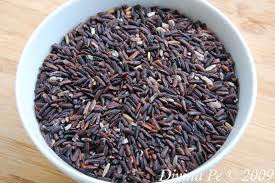
Black rice
Black rice (also known as purple rice or forbidden rice) is a range of rice types, some of which are glutinous rice. Varieties include but are not limited to Indonesian black rice and Thai jasmine black rice. Black rice is high in nutritional value and contains 18 amino acids, iron, zinc, copper, carotene, and several important vitamins[citation needed]. The grain has a similar amount of fiber to brown rice[1][unreliable source?] and like brown rice, has a mild, nutty taste. In China, black rice is claimed to be good for the kidney, stomach and liver[citation needed]; these claims have not been independently verified.
Black rice is a deep black color and usually turns deep purple when cooked. Its dark purple color is primarily due to its anthocyanin content, which is higher by weight than that of other colored grains but more limited in the number of different anthocyanin species present.[2][3] It is suitable for making porridge and it can also be used for making dessert, traditional Chinese black rice cake or bread.
In China, noodles made from black rice have been produced.
Thai black jasmine rice, while not as prevalent as the white and brown varieties, adds more vibrant color to meals, as well as providing additional health benefits.[4]
Economic importance
The black and white aromatic rices (Chakhao amubi and Chakhao poireiton and Chakhao angouba) of Manipur have their importance as a glutinous or sticky rice and are used for the community feast as well as ceremonial purposes as delicacy. Chak means rice and ahaoba means delicious, therefore, Chakhao means delicious rice. It is sold in the local markets at about Rs. 125 per kg of rice[when?]. The black aromatic rice of Manipur is served in standard hotels as a top rated variety of rice[citation needed]. Rice flake prepared from black rice is becoming popular[when?]. As the black glutinous aromatic rices of Manipur are poor yielders (about 2,500 kg/ha as paddy), these rices cover only less than 10% of the rain-fed wetland area under local cultivars, although there is a premium in the price of these rices[citation needed].
[edit]
History
It is believed[by whom?] that Chakhao of Manipur came with the people of Manipur, particularly Meiteis when they first settled on this land.[5] The words Amubi and Angouba stand for black and white, respectively, in Manipuri. Hence, Chakhao amubi and Chakhao angouba were named after the black and white color glutinous aromatic rice endosperm of these cultivars.
In ancient China, black rice was considered the finest grain and only served to the Emperor. Therefore, it sometimes is called “forbidden rice,” as it was off limits for the general public[citation needed].
Improvement
No systematic work on the improvement of black glutinous aromatic rice of Manipur has so far been taken up. However, germplasm collection, characterization and evaluation of these aromatic rice cultivars of have been made. The black glutinous aromatic rice of Manipur have been characterized for 34 morphological characters. These aromatic rice cultivars have been evaluated for eleven morpho-agronomic characters along with reaction to major diseases and pests of local importance.[citation needed]
As the domestic demand for the black glutinous aromatic rice of Manipur increases, efforts are to be made for developing high yielding varieties without losing the grain quality characters, cooking quality and aroma. The black glutinous aromatic rice of Manipur are in demand in the domestic market as well as are having possibilities for export.
From Wikipedia, the free encyclopedia
Rice vermicelli
Rice vermicelli are thin noodles made from rice and are a form of rice noodles.[1] They are sometimes referred to as rice noodles or rice sticks, but they should not be confused with cellophane noodles, which is another type of vermicelli.
Etymology and preparation
Rice vermicelli are a part of several Asian cuisines, where they are often eaten as part of a soup dish, stir fry, or salad. One particularly well known, slightly thicker variety, is called Guilin mǐfěn (桂林米粉), comes from the southern Chinese city of Guilin, where it is a breakfast staple.
Notable dishes
China
Cantonese noodles: A large number of Cantonese dishes use this ingredient (called 米粉 maifun in Cantonese). Usually the noodles are simmered in broth with other ingredients such as fish balls, beef balls, and/or fish slices.
In Fujian and Teochew cuisine, rice vermicelli is a commonly used noodle and is served either in soup, stir-fried and dressed with a sauce, or even 'dry' (without soup) with added ingredients and condiments.
Hong Kong
Singapore style noodles (星州炒米, Xīng zhōu cháo mǐ) is a dish of fried rice vermicelli common in Hong Kong Cantonese-style eateries, inspired by the spicy cuisines of Southeast Asia.
India and Pakistan
Sawaeyaa is a famous dish made from vermicelli cooked in milk sugar and dry nuts. It is eaten on Diwali, Eid, and other happy occasions in parts of India and Bangladesh.
Paayasam is a famous South Indian sweet dish made from vermicelli, sago, sugar, spices and nuts and milk.
Santhakai is a staple South Indian breakfast dish.
Myanmar
Mohinga, in Myanmar, is rice vermicelli served with curry gravy and fish.
Mont Di is rice vermicelli served with clear fish soup or as salad with fish flakes.
Philippines
Pancit
Singapore and Malaysia
Kerabu bee hoon is a Nyonya-style rice vermicelli dish, mixed with herbs and other seasonings.
Hokkien mee, commonly in Singapore, consists of rice vermicelli mixed with yellow noodles and fried with shrimp, sliced cuttlefish and pork bits. Hokkien mee throughout Malaysia varies considerably due to regional differences.
Satay bee hoon is rice vermicelli served with spicy peanut satay sauce, common in Singapore.
Taiwan
Taiwanese fried rice vermicelli is the dry, stir-fried local style (particularly known in the Hsinchu region). Its main ingredients include sliced pork, dried shrimp, and carrots.
A Hsinchu specialty is to serve rice vermicelli 'dry' 乾 (gan, not in a soup) with mushroom and ground pork.
Vietnam
Bánh hỏi
Bún riêu is rice vermicelli in soup with crab meat.
Bún thịt nướng is a Vietnamese dish consisting of grilled pork (often shredded) and vermicelli noodles over a bed of greens (salad and sliced cucumber), herbs and bean sprouts. Also, it often includes a few chopped egg rolls, spring onions, and shrimp. It is commonly served with roasted peanuts on top and a small bowl of nước chấm.
Summer roll is rice vermicelli with shrimp and herbs in a rice paper roll.
Bún bò Huế
Info : Wikipedia
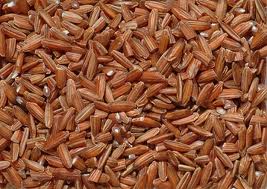
Red rice
Weedy rice, also known as red rice, is a species of rice (Oryza) that produces far fewer grains per plant than cultivated rice and is therefore considered a pest. The name "weedy rice" is used for all types and variations of rice which show some characteristic features of cultivated rice and grow as weeds in commercial rice fields. Populations of weedy rice are found in many rice-growing regions.[1][2] Weedy rice is various species and subspecies of rice which can distribute their seeds before harvest. Variations of weedy rice adapt to a wide range of natural conditions.[3][4][5]
Weedy rice grains often have a red pericarp, so for this reason in the international literature the term "red rice" is often used. This term, however, is not very relevant, because the rice with a red pericarp are also found in some cultivated varieties, but not in many forms of weedy rice.[6]
In most regions of the rice production, weedy rice is introduced after the transition from transplanting rice to sowing commercial seeds directly in the rice field. It has become very significant since the mid-1980s, especially in Europe, with the weak semi-dwarf varieties of indica subspecies.[7] Distribution generally promotes use of commercially purchased seeds containing weed seeds. Weedy rice can be found in 40-75% of rice fields in Europe,[8] 40% of fields in Brazil,[9] 55% in Senegal,[10] 80% in Cuba,[11] and 60% in Costa Rica.[12]
Because weedy rice and cultivated rice are so closely related, herbicides that would kill red rice would also kill cultivated rice. A genetically modified form of cultivated rice has been developed that will resist a herbicide, but this form of rice has not been approved for human consumption. This genetically modified form of cultivated rice has, however, appeared on the rice market
Info : http://en.wikipedia.org
Sunday, January 27, 2013
Pandan Leaf
Pandan is a herbaceous tropical plant with long green leaves. In Southeast Asia, pandan leaves are used to lend a unique taste and aroma to many Thai desserts and some drinks. Pandan leaves can also be used to wrap savory foods, such as chicken (see recipe links below). Pandan paste is used in cakes and desserts, as it is sweet and imbues foods with a bright green color. It can be purchased as a ready-to-use paste in Asian specialty stores. If purchased fresh, pandan leaves should be pounded into a paste for use in desserts, adding water sparingly.
Info : http://thaifood.about.com
Wednesday, December 19, 2012
Tempeh
Tempeh (/ˈtɛmpeɪ/; Javanese: témpé, IPA: [tempe]), is a traditional soy product originally from Indonesia. It is made by a natural culturing and controlled fermentation process that binds soybeans into a cake form, similar to a very firm vegetarian burger patty. Tempeh is unique among major traditional soy foods in that it is the only one that did not originate in the Sinosphere.
It originated in today's Indonesia, and is especially popular on the island of Java, where it is a staple source of protein. Like tofu, tempeh is made from soybeans, but it is a whole soybean product with different nutritional characteristics and textural qualities.[1] Tempeh's fermentation process and its retention of the whole bean give it a higher content of protein, dietary fiber, and vitamins. It has a firm texture and an earthy flavor which becomes more pronounced as it ages.[2][3] Because of its nutritional value, tempeh is used worldwide in vegetarian cuisine; some[who?] consider it to be a meat analogue.
History
Tempeh being sold in Java, early 20th century
Tempeh originated in today's Indonesia, probably on the island of Java. The earliest known reference to it appeared in 1815 in the Serat Centhini [The Book of Centini].[4] Three detailed, fully documented histories of tempeh, worldwide, have been written, all by Shurtleff and Aoyagi (1985, 1989, and 2001).
Production
Tempeh begins with whole soybeans, which are softened by soaking, and dehulled, then partly cooked. Specialty tempehs may be made from other types of beans, wheat, or may include a mixture of beans and whole grains.
A mild acidulent, usually vinegar, may be added to lower the pH and create a selective environment that favors the growth of the tempeh mold over competitors. A fermentation starter containing the spores of fungus Rhizopus oligosporus is mixed in. The beans are spread into a thin layer and are allowed to ferment for 24 to 36 hours at a temperature around 30°C (86°F). In good tempeh, the beans are knitted together by a mat of white mycelia.
Under conditions of lower temperature, or higher ventilation, gray or black patches of spores may form on the surface—this is not harmful, and should not affect the flavor or quality of the tempeh.[citation needed] This sporulation is normal on fully mature tempeh. A mild ammonia smell may accompany good tempeh as it ferments, but it should not be overpowering. In Indonesia, ripe tempeh (two or more days old) is considered a delicacy.
Nutrition
The soy carbohydrates in tempeh become more digestible as a result of the fermentation process. In particular, the oligosaccharides associated with gas and indigestion are greatly reduced by the Rhizopus culture. In traditional tempeh-making shops, the starter culture often contains beneficial bacteria that produce vitamins such as B12[5][6] (though it is uncertain whether this B12 is always present and bioavailable).[7] In western countries, it is more common to use a pure culture containing only Rhizopus oligosporus, which makes very little B12 and could be missing Klebsiella pneumoniae, which has been shown to produce significant levels of B12 analogs in tempeh when present. Whether these analogs are true, bioavailable B12, has not been thoroughly studied yet.[8] The fermentation process also reduces the phytic acid in soy,[9] which in turn allows the body to absorb the minerals that soy provides.
Preparation
In the kitchen, tempeh is often prepared by cutting it into pieces, soaking in brine or salty sauce, and then frying. Cooked tempeh can be eaten alone, or used in chili, stir frys, soups, salads, sandwiches, and stews. Tempeh's complex flavor has been described as nutty, meaty, and mushroom-like. It freezes well, and is now commonly available in many western supermarkets, as well as in ethnic markets and health food stores. Tempeh performs well in a cheese grater, after which it may be used in the place of ground beef (as in tacos). When thin-sliced and deep-fried in oil, tempeh obtains a crisp golden crust while maintaining a soft interior—its sponge-like consistency makes it suitable for marinating. Dried tempeh (whether cooked or raw) provides an excellent stew base for backpackers.
Tempe bongkrèk
Tempe bongkrèk is a variety of tempeh from Central Java, notably Banyumas regency, that is prepared with coconut. This type of tempeh occasionally gets contaminated with the bacterium Burkholderia gladioli, and the unwanted organism produces toxins (bongkrek acid and toxoflavin) from the coconut, besides killing off the Rhizopus fungus due to the antibiotic activity of bongkrek acid.
Fatalities from contaminated tempe bongkrèk were once common in the area where it was produced.[citation needed] Thus, its sale is now prohibited by law; clandestine manufacture continues, however, due to the popular flavor. The problem of contamination is not encountered with bean and grain tempehs, which have a different composition of fatty acids that is not favorable for the growth of B. gladioli, but encourages growth of Rhizopus instead. When bean or grain tempeh has the proper color, texture and smell, it is a very strong indication the product is safe. Yellow tempe bongkrèk is always highly toxic due to toxoflavin, but tempe bongkrèk with a normal coloration may still contain lethal amounts of bongkrek acid.
Tempe Mendoan
A variation of tempeh cooking method, this type is often found in Purwokerto. The origin of the word mendoan is from Banyumas regional dialect, which means "to cook instantly in very hot oil", that results in product cooked on the outside, but raw or partially cooked on the inside, and soft texture. The tempeh is dipped into spiced flour dressing before frying it in hot oil for a short time. Tempe mendoan may seem like half-cooked, soft-fried tempeh, unlike common crisp, fully deep-fried tempeh.
TypesName
tempe bacem tempeh boiled with spices and palm sugar, and then fried for a few minutes to enhance the taste. The result is damp, spicy, sweet and dark-colored tempeh.
tempe bongkrèk made from or with coconut press cake (see below)
tempe bosok (busuk) rotten tempeh, used in small amounts as a flavoring
tempe gembus made from okara
tempe gódhóng tempeh wrapped in banana leaves
tempe goreng deep-fried tempeh
tempe mendoan thinly sliced tempeh, battered and deep fried quickly, resulting in limp texture
tempe kedelai simply tempeh, made from soybeans
tempe kering raw tempeh cut into little sticks, deep fried, then mixed with spices and sugar, often mixed with separately fried peanuts and anchovies (ikan teri), can be stored up to a month if cooked properly.
tempe murni tempeh made in plastic wrap without any additives such as grated raw papaya (pure soybean cake)
tempe oncom (also onchom) made from peanut press cake, orange in color, with Neurospora sitophila
A new form of tempeh based on barley and oats instead of soya was developed by scientists at the Swedish Department of Food Science in 2008. It can be produced in climatic regions where it is not possible to grow soybeans.
Info : Wikipedia
Sunday, December 9, 2012
Parkia speciosa / Petai
Parkia speciosa (bitter bean, twisted cluster bean, or stink bean) is a plant of the genus Parkia in the family Fabaceae. It bears long, flat edible beans with bright green seeds the size and shape of plump almonds which have a rather peculiar smell, characterised by some as being similar to natural gas.
The beans or other Parkia species (Parkia javanica and Parkia singalaris for example) are popular as culinary ingredient in Indonesia, Malaysia, Singapore, Laos, southern Thailand, Burma, and northeastern India, and are sold in bunches, still in the pod, or the seeds are sold in plastic bags. Pods are gathered from the wild, or from cultivated trees: they are exported in jars or cans, pickled in brine, or frozen.
It is known as petai, pete or peteh in Malaysia, Indonesia and Singapore. In marketplace, depending on the country of origin Parkia species may be labelled peteh, petai, yongchaa, yongchaak, Zawngṭah (pronounced Zongtrah). They are best when combined with other strongly flavoured foods such as garlic, chili peppers, dried shrimp or shrimp paste, as in sambal petai. When young the pods are flat because the seeds have not yet developed, and they hang like a bunch of slightly twisted ribbons, pale green, almost translucent. At this stage they may be eaten raw, fried or pickled. Young tender pods with undeveloped beans can be used whole in stir-fried dishes.
In Indonesia, petai is very popular in the highlands of Java and Sumatra, especially among Sundanese, Minangkabau and many other people in different cultures of the island. In Sundanese cuisine petai might be eaten raw with sambal as part of lalab, fried or grilled. It also can be stir fried and mixed with oncom. In Java and Sumatra, it also might be added to sayur lodeh or sambal goreng ati petai (fried diced cow or chicken liver in sambal and petai). Nasi goreng kambing petai is popular variant of nasi goreng with goat meat and petai. In Minangkabau cuisine it usually become part of lado (Minang sambal) for ayam pop (Padang style fried chicken).
In Malaysia, petai also commonly served with sambal, or mixed with dried shrimp, chili peppers, red onions, belacan (shrimp paste), soy sauce and minced meat. In Thailand it is called sato (Thai: สะตอ), usually added to a Thai curry such as Thai Duck Green Curry, or as mu phat sato, stink bean with stir fried pork.
In Manipur, the seeds or the bean as a whole are eaten by preparing a local delicacy called Iromba or Yongchak singju. Iromba is a very common cuisine in Manipur made with boiled potato, fermented fish, chilly and a vegetable, in this case, Parkia. Yongchak singju is another favourite side dish made with Parkia cut into small pieces and then mixed with red hot chilly paste. In Mizoram, the Mizo people are also very fond of it, and call it Zawngṭah and they use to prepare it with chilli and a fermented pork called Saum. The Paite tribe of northeastern parts of India call it Zawngṭah (pronounced Zongtah) and mainly prepare it with chilly peppers and a special fermented pork called "Sathu" and called it Zawngṭah-hou. In Assam, Tripura and Bangladesh the Bishnupriya Manipuris call it Longchaak and consume the boiled or roasted seeds either alone or in a mash of boiled vegetables laced with fermented fish.
The seeds are also dried and seasoned for later consumption. When dried the seeds turn black. Petai beans or seeds look like broad beans. Like mature broad beans, they may have to be peeled before cooking. Petai has earned its nickname 'stink bean' because its strong smell is very pervasive. It lingers in the mouth and body. Like asparagus, it contains certain amino acids that give a strong smell to one's urine, an effect that can be noticed up to two days after consumption. Like other beans, their complex carbohydrates can also cause strong-smelling flatulence.
Botanical description
The petai tree can grow to about 90 feet (30 metres). It bears flowers in a light-bulb shaped mass at the end of long stalks. The flowers secrete a nectar that attracts bats and other pollinators. The tiny flowers mature and die. Long, twisted, translucent pods emerge in a cluster of 7 or 8 pods. When those pods are mature, within them will reside the petai beans or seeds.
Info : Wikipedia
Fermented Shrimp / Shrimp Paste
Shrimp paste or shrimp sauce, is a common ingredient used in Southeast Asian and Southern Chinese cuisine. It is known as terasi (also spelled trassi, terasie) in Indonesian, ngapi (ငါးပိ [ŋəpḭ]) in Burmese, kapi (กะปิ) in Thai, Khmer (កាពិ) and Lao language, belacan (also spelled belachan, blachang) in Malay, mắm ruốc, mắm tép and mắm tôm in Vietnamese (the name depends on the shrimp used),[1] bagoong alamang (also known as bagoong aramang) in Filipino, haam ha/ha jeung in Cantonese Chinese and hom ha/hae ko (Pe̍h-ōe-jī: hê-ko) in Min Nan Chinese.
It is made from fermented ground shrimp mixed with salt. Some versions are in its wet form such as those in Vietnam and other versions are sun dried and either cut into fist-sized rectangular blocks or sold in bulk. It is an essential ingredient in many curries and sauces. Shrimp paste can be found in most meals in Myanmar, Laos, Thailand, Malaysia, Singapore, Indonesia, Vietnam and the Philippines. It is often an ingredient in dip for fish or vegetables.
Varieties
Shrimp pastes vary in appearance from pale liquid sauces to solid chocolate-colored blocks. Shrimp paste produced in Hong Kong and Vietnam is typically a light pinkish gray while the type used for Burmese, Lao, Cambodian and Thai cooking is darker brown. While all shrimp paste has a pungent aroma, that of higher grades is generally milder. Markets near villages producing shrimp paste are the best places to obtain the highest quality product. Shrimp paste varies between different Asian cultures and can vary in smell, texture and saltiness
Belacan
Belacan, a Malay variety of shrimp paste, is prepared from krill, also known as geragau in Kristang (Portuguese creole spoken in Malaysia) or rebon in Sundanese and Javanese. In Malaysia, normally the krill would be steamed first and after that are mashed into a paste and stored for several months. The fermented shrimp are then prepared, fried and hard-pressed into cakes. William Marsden, an English writer included the word in his "A Dictionary of the Malayan Language" published in 1812.
Belacan is used as an ingredient in many dishes. A common preparation is sambal belacan, made by mixing toasted belacan with chilli peppers, minced garlic, shallot paste and sugar and then fried. Sometime it is toasted to bring out the flavour,[4] but that creates a strong odor.
Terasi
Terasi (trassi in Dutch), an Indonesian variant of dried shrimp paste, is usually purchased in dark blocks, but is also sometimes sold ground. The color and aroma of terasi varies depending on which village produced it. The color ranges from soft purple-reddish hue to darkish brown. In Cirebon, a coastal city in West Java, terasi is made from tiny shrimp (krill) called "rebon", the very origin of the city's name. In Sidoarjo, East Java, terasi is made from the mixture of ingredients such as fish, small shrimp (udang), and vegetables. Terasi is an important ingredient in Sambal Terasi, also many other Indonesian cuisine, such as sayur asam (fresh sour vegetable soup), lotek (also called gado-gado, Indonesian style salad in peanut sauce), karedok (similar to lotek, but the vegetables are served raw), and rujak (Indonesian style hot and spicy fruit salad).
On the island of Lombok, Indonesia, a more savory and sweet shrimp paste called lengkare is made.
Bagoong alamang
Shrimp paste in Dumaguete, Negros Oriental, Philippines
Bagoong alamang or "Ginamos" (in Western Visayas) is Filipino for shrimp paste, made from minute shrimp or krill (alamang) and is commonly eaten as a topping on green mangoes or used as a major cooking ingredient. Bagoong paste varies in appearance, flavor, and spiciness depending on the type. Pink and salty bagoong alamang is marketed as "fresh", and is essentially the shrimp-salt mixture left to marinate for a few days. This bagoong is rarely used in this form, save as a topping for unripe mangoes. The paste is customarily sauteed with various condiments, and its flavour can range from salty to spicy-sweet. The colour of the sauce will also vary with the cooking time and the ingredients used in the sauteeing. Cincalok is the Malaysian version of 'fresh' bagoong alamang.
Unlike in other parts of Southeast Asia and in Western Visayas,[7] where the shrimp is fermented beyond recognition or ground to a smooth consistency, the shrimp in bagoong alamang (in many parts of the Philippines) is readily identifiable, and the sauce itself has a chunky consistency. A small amount of cooked or sauteed bagoong is served on the side of a popular dish called "kare-kare", an oxtail stew made with peanuts. It is also used as the key flavouring ingredient of a sauteed pork dish, known as binagoongan (lit. "that to which bagoong is applied"). The word bagoong, however, is also connoted with the bonnet mouth and anchovy fish version, bagoong terong.
Kapi
Baskets and mounds of Thai shrimp paste (kapi) at Warorot market, Chiang Mai, Thailand
In Thailand shrimp paste (kapi) is an essential ingredient in many types of nam phrik, spicy dips or sauces, and in all Thai curry pastes, such as the paste used in kaeng som. Very popular in Thailand is nam phrik kapi, a spicy condiment made with fresh shrimp paste and most often eaten together with fried pla thu (Short mackerel) and fried, steamed or raw vegetables. In Southern Thailand there are three types of shrimp paste: one made only from shrimp, one containing a mixture of shrimp and fish ingredients, and another paste that is sweet.
Ngapi yay
A watery dip or condiment that is very popular in Myanmar, especially the Burmese and Karen ethnic groups. The ngapi (either fish or shrimp, but mostly whole fish ngapi is used) is boiled with onions, tomato, garlic, pepper and other spices. The result is a greenish-grey broth-like sauce, which makes its way to every Burmese dining table. Fresh, raw or blanched vegetables and fruits (such as mint, cabbage, tomatoes, green mangoes, green apples, olives, chilli, onions and garlic) are dipped into the ngapi yay and eaten. Sometimes, in less affluent families, ngapi yay forms the main dish, and also the main source of protein.
Hom ha
This Chinese shrimp paste is popular in southeastern China. This shrimp paste is lighter in color than many southeast Asian varieties and is often used in pork, seafood and vegetable stir fry dishes. The shrimp paste industry has historically been important in the Hong Kong region.
Hae ko or petis udang
Hae ko means prawn paste in the Hokkien dialect. It is also called petis udang in Malay and Indonesian. This version of shrimp/prawn paste is used in Malaysia, Singapore and Indonesia. In Indonesia it is particularly popular in East Java. This thick black paste has a molasses like consistency instead of the hard brick like appearance of belacan. It also tastes sweeter because of the added sugar. It is used to flavour common local street foods like popiah spring rolls, laksa curry, chee cheong fan rice rolls and rojak salads, such as rujak cingur and rujak petis.
Galmbo
Galmbo is a dried shrimp paste used in Goa, India, particularly in the spicy sauce balchao.
Industry
A vendor selling shrimp paste
Shrimp paste continues to be made by fishing families in coastal villages. They sell it to vendors, middlemen or distributors who package it for resale to consumers. Shrimp paste is often known for the region it comes from since production techniques and quality vary from village to village. Some coastal regions in Indonesia such as Bagan Siapi-api in North Sumatra, Indramayu and Cirebon in West Java, and Sidoarjo in East Java; as well as villages such as Pulau Betong in Malaysia or Ma Wan island in Hong Kong and in Lingayen Gulf, Pangasinan in the Philippines are well known for producing very fine quality shrimp paste.
Preparation
Preparation techniques can vary greatly; however, the following procedure is most common in China, and much of Southeast Asia.
After being caught, small shrimp are unloaded, rinsed and drained before being dried. Drying can be done on plastic mats on the ground in the sun, on metal beds on low stilts, or using other methods. After several days, the shrimp-salt mixture will darken and turn into a thick pulp. If the shrimp used to produce the paste were small, it is ready to be served as soon as the individual shrimp have broken-down beyond recognition. If the shrimp are larger, fermentation will take longer and the pulp will be ground to provide a smoother consistency. The fermentation/grinding process is usually repeated several times until the paste fully matures. The paste is then dried and cut into bricks by the villagers to be sold. Dried shrimp paste does not require refrigeration.
Availability
Trassi udang, as bought in a Dutch supermarket.
Shrimp paste can be found in nations outside Southeast Asia in markets catering to Asian customers. In the Netherlands, Indonesian type of shrimp paste can be found in supermarkets selling Asian foodstuff such as Trassie oedang from the Conimex brand. In the United States brands of Thai shrimp paste such as Pantainorasingh and Tra Chang can be found. Shrimp pastes from other countries are also available in Asian supermarkets and through mail order. It is also readily available in Suriname due to the high concentration of Javanese inhabitants. In Australia shrimp paste can be found in most suburbs where South East Asian people reside.
Info : Wikipedia
Shahe fen / Flat Rice Noodle
Shahe fen or he fen is a type of wide Chinese noodle made from rice.
Names
While shahe fen and he fen are transliterations based on Mandarin, there are numerous other transliterations based on Cantonese, which include ho fen, hofen, ho-fen, ho fun, ho-fun, hofoen (a Dutch transliteration in Suriname), hor fun, hor fen, sar hor fun, etc. In addition, shahe fen is often synonymously called kway teow (粿條), literally "ricecake strips", transliteration based on Min Nan Chinese, POJ: kóe-tiâu) or guotiao (pinyin: guǒtiáo; the corresponding transliteration of Mandarin), as in the name of a dish called char kway teow. However, shahe fen and kway teow are strictly and technically not the same (the latter being essentially ricecakes sliced into strips) and the Min Nans in general still consciously make a distinction between shahe fen and kway teow in their speech. Original ricecakes or its strips are very stiff in texture (even after cooking), making them unpopular with modern consumers.
It is also known in Sabah as da fen (大粉), means "wide vermicelli", due to its similarity of colour and texture to vermicelli.
These noodles are called guay tiew sen yai (Thai: เส้นใหญ่, meaning "large rice noodles") in Thailand, and kwetiau in Indonesia.
[edit]
Origin
Sliced fish hor fun sold in Bukit Batok, Singapore
Shahe fen is believed to have originated in the town of Shahe (沙河; Cantonese: Sa1ho4 pinyin: Shāhé), now part of the Tianhe District in the city of Guangzhou, in the southern Chinese province of Guangdong, whence their name derives. Shahe fen is typical of southern Chinese cuisine, although similar noodles are also prepared and enjoyed in nearby Southeast Asian nations such as Vietnam, Thailand, Cambodia, Philippines, Malaysia, Indonesia and Singapore, all of which have sizeable Chinese populations.
[edit]
Types
Wide shahe fen stir-fried with soy sauce
Shahe fen noodles are white in color, broad, and somewhat slippery. Their texture is elastic and a bit chewy. They do not freeze or dry well and are thus generally (where available) purchased fresh, in strips or sheets that may be cut to the desired width. Where fresh noodles are not available, they may also be purchased packaged in dried form, in various widths.
Shahe fen noodles are very similar to Vietnamese bánh phở noodles, which are likely derived from their Chinese counterpart. Although the phở noodles used in soups may vary in width, wide phở noodles are also common in stir fried dishes. The popular Thai dishes pad see ew and drunken noodles are also made with similar noodles.
[edit]
Chao fen
See also: Beef chow fun
Beef chow fun
Shahe fen is often stir fried with meat and vegetables in a dish called chao fen (炒粉; pinyin: chǎo fěn). While chao fen is a transliteration of Mandarin, chow fun from Cantonese is the name to which this dish is most often referred in Chinese restaurants in North America.
Info : Wikipedia
Image : Own
Thursday, December 6, 2012
Sesame oil

Sesame oil (also known as gingelly oil or til oil) is an edible vegetable oil derived from sesame seeds. Besides being used as a cooking oil in South India, it is often used as a flavor enhancer in Chinese, Japanese, Korean, and to a lesser extent Southeast Asian cuisine.
The oil from the nutrient rich seed is popular in alternative medicine - from traditional massages and treatments to the modern day. The traditional Indian medical practice of Ayurveda uses sesame oil to pacify stress related symptoms.[1] Ongoing research also indicates that the rich presence of antioxidants and polyunsaturated fats in sesame oil could help control blood pressure.
The oil is popular in Asia and is also one of the earliest known crop-based oils, but world-wide mass modern production continues to be limited even today due to the inefficient manual harvesting process required to extract the oil.
Info : Wikipedia
AngCiu Saus Sari Tapai
Net Wt. 600mL. Cooking Sauce or Penyedap Masakan from glutinous rice. This cooking sauce is made from pure, fermented glutinous rice (tapai ketan hitam). The product recipe has been passed from generations to generations. It has a unique taste, bringing a special and savoury taste to your cooking. Suitable for meat and poultry dishes, seafood and vegetables. Ingredients include black glutinous rice, red rice, and other herbs.
Info : Wikipedia
Oyster Sauce
What is in Oyster Sauce?
Traditionally, oyster sauce is made by slowly simmering oysters in water until the juices caramelize into a thick, brown, intensely flavorful sauce. Today, many shortcuts have been made to create a similar flavor more quickly and for less money. Oyster sauces today are usually made with a base of sugar and salt and thickened with corn starch. Oyster extracts or essences are then used to give flavor to the base sauce. Other ingredients, such as soy sauce and MSG may also be added to deepen the flavor and add color. The quality of the oyster sauce will greatly affect the flavor.
A vegetarian version of oyster sauce is available and it is made using mushrooms to provide the deep, earthy flavor. Mushrooms, especially the oyster mushroom, have a high level of umami flavor, similar to that of real oysters.
What Does Oyster Sauce Taste Like?
Oyster sauce has a nice balance between sweet and salty with a rich, earthy undertone, thanks to the oyster reduction or extracts. The quality of oyster sauce will greatly affect the flavor. Lower quality oyster sauces may use artificial oyster flavoring, while top-notch oyster sauces use only real oyster reductions for flavoring.
How is Oyster Sauce Used?
Oyster sauce is used for a variety of applications, including a dressing for noodles, vegetables, and stir fries, or as a base for other sauces and marinades. Oyster sauce is a main ingredient in the popular Chinese dish, Beef and Broccoli. Oyster sauce is also sometimes drizzled over sushi rolls for added flavor and visual appeal.
Where to Buy Oyster Sauce
With the increasing popularity of Asian cuisine in the United States, oyster sauce can be found in many major grocery stores, in the international aisle, with the other Asian sauces and condiments. Shopping at an Ethnic or Asian market will provide a larger selection of oyster sauce brands, varieties, and quality selections.
After opening, oyster sauce should be kept refrigerated in an airtight container. When stored properly, oyster sauce should stay good for three to six months. Oyster sauce purchased in a can or any other non-resealable container should be transferred to a resealable container for storage. If at any time your oyster sauce changes color or develops an off flavor, it should be discarded.
Info : Wikipedia
Subscribe to:
Posts (Atom)