Monday, January 28, 2013

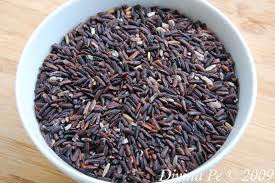
Black rice


Black rice (also known as purple rice or forbidden rice) is a range of rice types, some of which are glutinous rice. Varieties include but are not limited to Indonesian black rice and Thai jasmine black rice. Black rice is high in nutritional value and contains 18 amino acids, iron, zinc, copper, carotene, and several important vitamins[citation needed]. The grain has a similar amount of fiber to brown rice[1][unreliable source?] and like brown rice, has a mild, nutty taste. In China, black rice is claimed to be good for the kidney, stomach and liver[citation needed]; these claims have not been independently verified.

Black rice is a deep black color and usually turns deep purple when cooked. Its dark purple color is primarily due to its anthocyanin content, which is higher by weight than that of other colored grains but more limited in the number of different anthocyanin species present.[2][3] It is suitable for making porridge and it can also be used for making dessert, traditional Chinese black rice cake or bread.

In China, noodles made from black rice have been produced.

Thai black jasmine rice, while not as prevalent as the white and brown varieties, adds more vibrant color to meals, as well as providing additional health benefits.[4]

Economic importance

The black and white aromatic rices (Chakhao amubi and Chakhao poireiton and Chakhao angouba) of Manipur have their importance as a glutinous or sticky rice and are used for the community feast as well as ceremonial purposes as delicacy. Chak means rice and ahaoba means delicious, therefore, Chakhao means delicious rice. It is sold in the local markets at about Rs. 125 per kg of rice[when?]. The black aromatic rice of Manipur is served in standard hotels as a top rated variety of rice[citation needed]. Rice flake prepared from black rice is becoming popular[when?]. As the black glutinous aromatic rices of Manipur are poor yielders (about 2,500 kg/ha as paddy), these rices cover only less than 10% of the rain-fed wetland area under local cultivars, although there is a premium in the price of these rices[citation needed].
[edit]
History

It is believed[by whom?] that Chakhao of Manipur came with the people of Manipur, particularly Meiteis when they first settled on this land.[5] The words Amubi and Angouba stand for black and white, respectively, in Manipuri. Hence, Chakhao amubi and Chakhao angouba were named after the black and white color glutinous aromatic rice endosperm of these cultivars.

In ancient China, black rice was considered the finest grain and only served to the Emperor. Therefore, it sometimes is called “forbidden rice,” as it was off limits for the general public[citation needed].

Improvement

No systematic work on the improvement of black glutinous aromatic rice of Manipur has so far been taken up. However, germplasm collection, characterization and evaluation of these aromatic rice cultivars of have been made. The black glutinous aromatic rice of Manipur have been characterized for 34 morphological characters. These aromatic rice cultivars have been evaluated for eleven morpho-agronomic characters along with reaction to major diseases and pests of local importance.[citation needed]

As the domestic demand for the black glutinous aromatic rice of Manipur increases, efforts are to be made for developing high yielding varieties without losing the grain quality characters, cooking quality and aroma. The black glutinous aromatic rice of Manipur are in demand in the domestic market as well as are having possibilities for export.


From Wikipedia, the free encyclopedia

Rice vermicelli


Rice vermicelli are thin noodles made from rice and are a form of rice noodles.[1] They are sometimes referred to as rice noodles or rice sticks, but they should not be confused with cellophane noodles, which is another type of vermicelli.

Etymology and preparation

Rice vermicelli are a part of several Asian cuisines, where they are often eaten as part of a soup dish, stir fry, or salad. One particularly well known, slightly thicker variety, is called Guilin mǐfěn (桂林米粉), comes from the southern Chinese city of Guilin, where it is a breakfast staple.


Notable dishes

China

Cantonese noodles: A large number of Cantonese dishes use this ingredient (called 米粉 maifun in Cantonese). Usually the noodles are simmered in broth with other ingredients such as fish balls, beef balls, and/or fish slices.
In Fujian and Teochew cuisine, rice vermicelli is a commonly used noodle and is served either in soup, stir-fried and dressed with a sauce, or even 'dry' (without soup) with added ingredients and condiments.

Hong Kong

Singapore style noodles (星州炒米, Xīng zhōu cháo mǐ) is a dish of fried rice vermicelli common in Hong Kong Cantonese-style eateries, inspired by the spicy cuisines of Southeast Asia.

India and Pakistan

Sawaeyaa is a famous dish made from vermicelli cooked in milk sugar and dry nuts. It is eaten on Diwali, Eid, and other happy occasions in parts of India and Bangladesh.
Paayasam is a famous South Indian sweet dish made from vermicelli, sago, sugar, spices and nuts and milk.
Santhakai is a staple South Indian breakfast dish.

Myanmar

Mohinga, in Myanmar, is rice vermicelli served with curry gravy and fish.
Mont Di is rice vermicelli served with clear fish soup or as salad with fish flakes.

Philippines

Pancit

Singapore and Malaysia

Kerabu bee hoon is a Nyonya-style rice vermicelli dish, mixed with herbs and other seasonings.
Hokkien mee, commonly in Singapore, consists of rice vermicelli mixed with yellow noodles and fried with shrimp, sliced cuttlefish and pork bits. Hokkien mee throughout Malaysia varies considerably due to regional differences.
Satay bee hoon is rice vermicelli served with spicy peanut satay sauce, common in Singapore.

Taiwan

Taiwanese fried rice vermicelli is the dry, stir-fried local style (particularly known in the Hsinchu region). Its main ingredients include sliced pork, dried shrimp, and carrots.
A Hsinchu specialty is to serve rice vermicelli 'dry' 乾 (gan, not in a soup) with mushroom and ground pork.

Vietnam

Bánh hỏi
Bún riêu is rice vermicelli in soup with crab meat.
Bún thịt nướng is a Vietnamese dish consisting of grilled pork (often shredded) and vermicelli noodles over a bed of greens (salad and sliced cucumber), herbs and bean sprouts. Also, it often includes a few chopped egg rolls, spring onions, and shrimp. It is commonly served with roasted peanuts on top and a small bowl of nước chấm.
Summer roll is rice vermicelli with shrimp and herbs in a rice paper roll.
Bún bò Huế


Info : Wikipedia


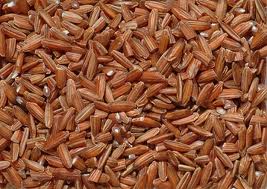
Red rice


Weedy rice, also known as red rice, is a species of rice (Oryza) that produces far fewer grains per plant than cultivated rice and is therefore considered a pest. The name "weedy rice" is used for all types and variations of rice which show some characteristic features of cultivated rice and grow as weeds in commercial rice fields. Populations of weedy rice are found in many rice-growing regions.[1][2] Weedy rice is various species and subspecies of rice which can distribute their seeds before harvest. Variations of weedy rice adapt to a wide range of natural conditions.[3][4][5]

Weedy rice grains often have a red pericarp, so for this reason in the international literature the term "red rice" is often used. This term, however, is not very relevant, because the rice with a red pericarp are also found in some cultivated varieties, but not in many forms of weedy rice.[6]

In most regions of the rice production, weedy rice is introduced after the transition from transplanting rice to sowing commercial seeds directly in the rice field. It has become very significant since the mid-1980s, especially in Europe, with the weak semi-dwarf varieties of indica subspecies.[7] Distribution generally promotes use of commercially purchased seeds containing weed seeds. Weedy rice can be found in 40-75% of rice fields in Europe,[8] 40% of fields in Brazil,[9] 55% in Senegal,[10] 80% in Cuba,[11] and 60% in Costa Rica.[12]

Because weedy rice and cultivated rice are so closely related, herbicides that would kill red rice would also kill cultivated rice. A genetically modified form of cultivated rice has been developed that will resist a herbicide, but this form of rice has not been approved for human consumption. This genetically modified form of cultivated rice has, however, appeared on the rice market


Info : http://en.wikipedia.org

Sunday, January 27, 2013

Pandan Leaf


Pandan is a herbaceous tropical plant with long green leaves. In Southeast Asia, pandan leaves are used to lend a unique taste and aroma to many Thai desserts and some drinks. Pandan leaves can also be used to wrap savory foods, such as chicken (see recipe links below). Pandan paste is used in cakes and desserts, as it is sweet and imbues foods with a bright green color. It can be purchased as a ready-to-use paste in Asian specialty stores. If purchased fresh, pandan leaves should be pounded into a paste for use in desserts, adding water sparingly.


Info : http://thaifood.about.com

Wednesday, December 19, 2012

Tempeh


Tempeh (/ˈtɛmpeɪ/; Javanese: témpé, IPA: [tempe]), is a traditional soy product originally from Indonesia. It is made by a natural culturing and controlled fermentation process that binds soybeans into a cake form, similar to a very firm vegetarian burger patty. Tempeh is unique among major traditional soy foods in that it is the only one that did not originate in the Sinosphere.

It originated in today's Indonesia, and is especially popular on the island of Java, where it is a staple source of protein. Like tofu, tempeh is made from soybeans, but it is a whole soybean product with different nutritional characteristics and textural qualities.[1] Tempeh's fermentation process and its retention of the whole bean give it a higher content of protein, dietary fiber, and vitamins. It has a firm texture and an earthy flavor which becomes more pronounced as it ages.[2][3] Because of its nutritional value, tempeh is used worldwide in vegetarian cuisine; some[who?] consider it to be a meat analogue.

History

Tempeh being sold in Java, early 20th century


Tempeh originated in today's Indonesia, probably on the island of Java. The earliest known reference to it appeared in 1815 in the Serat Centhini [The Book of Centini].[4] Three detailed, fully documented histories of tempeh, worldwide, have been written, all by Shurtleff and Aoyagi (1985, 1989, and 2001).

Production

Tempeh begins with whole soybeans, which are softened by soaking, and dehulled, then partly cooked. Specialty tempehs may be made from other types of beans, wheat, or may include a mixture of beans and whole grains.

A mild acidulent, usually vinegar, may be added to lower the pH and create a selective environment that favors the growth of the tempeh mold over competitors. A fermentation starter containing the spores of fungus Rhizopus oligosporus is mixed in. The beans are spread into a thin layer and are allowed to ferment for 24 to 36 hours at a temperature around 30°C (86°F). In good tempeh, the beans are knitted together by a mat of white mycelia.

Under conditions of lower temperature, or higher ventilation, gray or black patches of spores may form on the surface—this is not harmful, and should not affect the flavor or quality of the tempeh.[citation needed] This sporulation is normal on fully mature tempeh. A mild ammonia smell may accompany good tempeh as it ferments, but it should not be overpowering. In Indonesia, ripe tempeh (two or more days old) is considered a delicacy.

Nutrition

The soy carbohydrates in tempeh become more digestible as a result of the fermentation process. In particular, the oligosaccharides associated with gas and indigestion are greatly reduced by the Rhizopus culture. In traditional tempeh-making shops, the starter culture often contains beneficial bacteria that produce vitamins such as B12[5][6] (though it is uncertain whether this B12 is always present and bioavailable).[7] In western countries, it is more common to use a pure culture containing only Rhizopus oligosporus, which makes very little B12 and could be missing Klebsiella pneumoniae, which has been shown to produce significant levels of B12 analogs in tempeh when present. Whether these analogs are true, bioavailable B12, has not been thoroughly studied yet.[8] The fermentation process also reduces the phytic acid in soy,[9] which in turn allows the body to absorb the minerals that soy provides.

Preparation

In the kitchen, tempeh is often prepared by cutting it into pieces, soaking in brine or salty sauce, and then frying. Cooked tempeh can be eaten alone, or used in chili, stir frys, soups, salads, sandwiches, and stews. Tempeh's complex flavor has been described as nutty, meaty, and mushroom-like. It freezes well, and is now commonly available in many western supermarkets, as well as in ethnic markets and health food stores. Tempeh performs well in a cheese grater, after which it may be used in the place of ground beef (as in tacos). When thin-sliced and deep-fried in oil, tempeh obtains a crisp golden crust while maintaining a soft interior—its sponge-like consistency makes it suitable for marinating. Dried tempeh (whether cooked or raw) provides an excellent stew base for backpackers.

Tempe bongkrèk

Tempe bongkrèk is a variety of tempeh from Central Java, notably Banyumas regency, that is prepared with coconut. This type of tempeh occasionally gets contaminated with the bacterium Burkholderia gladioli, and the unwanted organism produces toxins (bongkrek acid and toxoflavin) from the coconut, besides killing off the Rhizopus fungus due to the antibiotic activity of bongkrek acid.

Fatalities from contaminated tempe bongkrèk were once common in the area where it was produced.[citation needed] Thus, its sale is now prohibited by law; clandestine manufacture continues, however, due to the popular flavor. The problem of contamination is not encountered with bean and grain tempehs, which have a different composition of fatty acids that is not favorable for the growth of B. gladioli, but encourages growth of Rhizopus instead. When bean or grain tempeh has the proper color, texture and smell, it is a very strong indication the product is safe. Yellow tempe bongkrèk is always highly toxic due to toxoflavin, but tempe bongkrèk with a normal coloration may still contain lethal amounts of bongkrek acid.

Tempe Mendoan

A variation of tempeh cooking method, this type is often found in Purwokerto. The origin of the word mendoan is from Banyumas regional dialect, which means "to cook instantly in very hot oil", that results in product cooked on the outside, but raw or partially cooked on the inside, and soft texture. The tempeh is dipped into spiced flour dressing before frying it in hot oil for a short time. Tempe mendoan may seem like half-cooked, soft-fried tempeh, unlike common crisp, fully deep-fried tempeh.

TypesName 

tempe bacem tempeh boiled with spices and palm sugar, and then fried for a few minutes to enhance the taste. The result is damp, spicy, sweet and dark-colored tempeh.
tempe bongkrèk made from or with coconut press cake (see below)
tempe bosok (busuk) rotten tempeh, used in small amounts as a flavoring
tempe gembus made from okara
tempe gódhóng tempeh wrapped in banana leaves
tempe goreng deep-fried tempeh
tempe mendoan thinly sliced tempeh, battered and deep fried quickly, resulting in limp texture
tempe kedelai simply tempeh, made from soybeans
tempe kering raw tempeh cut into little sticks, deep fried, then mixed with spices and sugar, often mixed with separately fried peanuts and anchovies (ikan teri), can be stored up to a month if cooked properly.
tempe murni tempeh made in plastic wrap without any additives such as grated raw papaya (pure soybean cake)
tempe oncom (also onchom) made from peanut press cake, orange in color, with Neurospora sitophila

A new form of tempeh based on barley and oats instead of soya was developed by scientists at the Swedish Department of Food Science in 2008. It can be produced in climatic regions where it is not possible to grow soybeans.


Info : Wikipedia

Sunday, December 9, 2012

Parkia speciosa / Petai


Parkia speciosa (bitter bean, twisted cluster bean, or stink bean) is a plant of the genus Parkia in the family Fabaceae. It bears long, flat edible beans with bright green seeds the size and shape of plump almonds which have a rather peculiar smell, characterised by some as being similar to natural gas.

The beans or other Parkia species (Parkia javanica and Parkia singalaris for example) are popular as culinary ingredient in Indonesia, Malaysia, Singapore, Laos, southern Thailand, Burma, and northeastern India, and are sold in bunches, still in the pod, or the seeds are sold in plastic bags. Pods are gathered from the wild, or from cultivated trees: they are exported in jars or cans, pickled in brine, or frozen.

It is known as petai, pete or peteh in Malaysia, Indonesia and Singapore. In marketplace, depending on the country of origin Parkia species may be labelled peteh, petai, yongchaa, yongchaak, Zawngṭah (pronounced Zongtrah). They are best when combined with other strongly flavoured foods such as garlic, chili peppers, dried shrimp or shrimp paste, as in sambal petai. When young the pods are flat because the seeds have not yet developed, and they hang like a bunch of slightly twisted ribbons, pale green, almost translucent. At this stage they may be eaten raw, fried or pickled. Young tender pods with undeveloped beans can be used whole in stir-fried dishes.

In Indonesia, petai is very popular in the highlands of Java and Sumatra, especially among Sundanese, Minangkabau and many other people in different cultures of the island. In Sundanese cuisine petai might be eaten raw with sambal as part of lalab, fried or grilled. It also can be stir fried and mixed with oncom. In Java and Sumatra, it also might be added to sayur lodeh or sambal goreng ati petai (fried diced cow or chicken liver in sambal and petai). Nasi goreng kambing petai is popular variant of nasi goreng with goat meat and petai. In Minangkabau cuisine it usually become part of lado (Minang sambal) for ayam pop (Padang style fried chicken).

In Malaysia, petai also commonly served with sambal, or mixed with dried shrimp, chili peppers, red onions, belacan (shrimp paste), soy sauce and minced meat. In Thailand it is called sato (Thai: สะตอ), usually added to a Thai curry such as Thai Duck Green Curry, or as mu phat sato, stink bean with stir fried pork.

In Manipur, the seeds or the bean as a whole are eaten by preparing a local delicacy called Iromba or Yongchak singju. Iromba is a very common cuisine in Manipur made with boiled potato, fermented fish, chilly and a vegetable, in this case, Parkia. Yongchak singju is another favourite side dish made with Parkia cut into small pieces and then mixed with red hot chilly paste. In Mizoram, the Mizo people are also very fond of it, and call it Zawngṭah and they use to prepare it with chilli and a fermented pork called Saum. The Paite tribe of northeastern parts of India call it Zawngṭah (pronounced Zongtah) and mainly prepare it with chilly peppers and a special fermented pork called "Sathu" and called it Zawngṭah-hou. In Assam, Tripura and Bangladesh the Bishnupriya Manipuris call it Longchaak and consume the boiled or roasted seeds either alone or in a mash of boiled vegetables laced with fermented fish.

The seeds are also dried and seasoned for later consumption. When dried the seeds turn black. Petai beans or seeds look like broad beans. Like mature broad beans, they may have to be peeled before cooking. Petai has earned its nickname 'stink bean' because its strong smell is very pervasive. It lingers in the mouth and body. Like asparagus, it contains certain amino acids that give a strong smell to one's urine, an effect that can be noticed up to two days after consumption. Like other beans, their complex carbohydrates can also cause strong-smelling flatulence.

Botanical description

The petai tree can grow to about 90 feet (30 metres). It bears flowers in a light-bulb shaped mass at the end of long stalks. The flowers secrete a nectar that attracts bats and other pollinators. The tiny flowers mature and die. Long, twisted, translucent pods emerge in a cluster of 7 or 8 pods. When those pods are mature, within them will reside the petai beans or seeds.


Info : Wikipedia

Fermented Shrimp / Shrimp Paste


Shrimp paste or shrimp sauce, is a common ingredient used in Southeast Asian and Southern Chinese cuisine. It is known as terasi (also spelled trassi, terasie) in Indonesian, ngapi (ငါးပိ [ŋəpḭ]) in Burmese, kapi (กะปิ) in Thai, Khmer (កាពិ) and Lao language, belacan (also spelled belachan, blachang) in Malay, mắm ruốc, mắm tép and mắm tôm in Vietnamese (the name depends on the shrimp used),[1] bagoong alamang (also known as bagoong aramang) in Filipino, haam ha/ha jeung in Cantonese Chinese and hom ha/hae ko (Pe̍h-ōe-jī: hê-ko) in Min Nan Chinese.

It is made from fermented ground shrimp mixed with salt. Some versions are in its wet form such as those in Vietnam and other versions are sun dried and either cut into fist-sized rectangular blocks or sold in bulk. It is an essential ingredient in many curries and sauces. Shrimp paste can be found in most meals in Myanmar, Laos, Thailand, Malaysia, Singapore, Indonesia, Vietnam and the Philippines. It is often an ingredient in dip for fish or vegetables.

Varieties

Shrimp pastes vary in appearance from pale liquid sauces to solid chocolate-colored blocks. Shrimp paste produced in Hong Kong and Vietnam is typically a light pinkish gray while the type used for Burmese, Lao, Cambodian and Thai cooking is darker brown. While all shrimp paste has a pungent aroma, that of higher grades is generally milder. Markets near villages producing shrimp paste are the best places to obtain the highest quality product. Shrimp paste varies between different Asian cultures and can vary in smell, texture and saltiness

Belacan

Belacan, a Malay variety of shrimp paste, is prepared from krill, also known as geragau in Kristang (Portuguese creole spoken in Malaysia) or rebon in Sundanese and Javanese. In Malaysia, normally the krill would be steamed first and after that are mashed into a paste and stored for several months. The fermented shrimp are then prepared, fried and hard-pressed into cakes. William Marsden, an English writer included the word in his "A Dictionary of the Malayan Language" published in 1812.

Belacan is used as an ingredient in many dishes. A common preparation is sambal belacan, made by mixing toasted belacan with chilli peppers, minced garlic, shallot paste and sugar and then fried. Sometime it is toasted to bring out the flavour,[4] but that creates a strong odor.

Terasi

Terasi (trassi in Dutch), an Indonesian variant of dried shrimp paste, is usually purchased in dark blocks, but is also sometimes sold ground. The color and aroma of terasi varies depending on which village produced it. The color ranges from soft purple-reddish hue to darkish brown. In Cirebon, a coastal city in West Java, terasi is made from tiny shrimp (krill) called "rebon", the very origin of the city's name. In Sidoarjo, East Java, terasi is made from the mixture of ingredients such as fish, small shrimp (udang), and vegetables. Terasi is an important ingredient in Sambal Terasi, also many other Indonesian cuisine, such as sayur asam (fresh sour vegetable soup), lotek (also called gado-gado, Indonesian style salad in peanut sauce), karedok (similar to lotek, but the vegetables are served raw), and rujak (Indonesian style hot and spicy fruit salad).

On the island of Lombok, Indonesia, a more savory and sweet shrimp paste called lengkare is made.

Bagoong alamang

Shrimp paste in Dumaguete, Negros Oriental, Philippines
Bagoong alamang or "Ginamos" (in Western Visayas) is Filipino for shrimp paste, made from minute shrimp or krill (alamang) and is commonly eaten as a topping on green mangoes or used as a major cooking ingredient. Bagoong paste varies in appearance, flavor, and spiciness depending on the type. Pink and salty bagoong alamang is marketed as "fresh", and is essentially the shrimp-salt mixture left to marinate for a few days. This bagoong is rarely used in this form, save as a topping for unripe mangoes. The paste is customarily sauteed with various condiments, and its flavour can range from salty to spicy-sweet. The colour of the sauce will also vary with the cooking time and the ingredients used in the sauteeing. Cincalok is the Malaysian version of 'fresh' bagoong alamang.

Unlike in other parts of Southeast Asia and in Western Visayas,[7] where the shrimp is fermented beyond recognition or ground to a smooth consistency, the shrimp in bagoong alamang (in many parts of the Philippines) is readily identifiable, and the sauce itself has a chunky consistency. A small amount of cooked or sauteed bagoong is served on the side of a popular dish called "kare-kare", an oxtail stew made with peanuts. It is also used as the key flavouring ingredient of a sauteed pork dish, known as binagoongan (lit. "that to which bagoong is applied"). The word bagoong, however, is also connoted with the bonnet mouth and anchovy fish version, bagoong terong.

Kapi

Baskets and mounds of Thai shrimp paste (kapi) at Warorot market, Chiang Mai, Thailand
In Thailand shrimp paste (kapi) is an essential ingredient in many types of nam phrik, spicy dips or sauces, and in all Thai curry pastes, such as the paste used in kaeng som. Very popular in Thailand is nam phrik kapi, a spicy condiment made with fresh shrimp paste and most often eaten together with fried pla thu (Short mackerel) and fried, steamed or raw vegetables. In Southern Thailand there are three types of shrimp paste: one made only from shrimp, one containing a mixture of shrimp and fish ingredients, and another paste that is sweet.

Ngapi yay
A watery dip or condiment that is very popular in Myanmar, especially the Burmese and Karen ethnic groups. The ngapi (either fish or shrimp, but mostly whole fish ngapi is used) is boiled with onions, tomato, garlic, pepper and other spices. The result is a greenish-grey broth-like sauce, which makes its way to every Burmese dining table. Fresh, raw or blanched vegetables and fruits (such as mint, cabbage, tomatoes, green mangoes, green apples, olives, chilli, onions and garlic) are dipped into the ngapi yay and eaten. Sometimes, in less affluent families, ngapi yay forms the main dish, and also the main source of protein.

Hom ha

This Chinese shrimp paste is popular in southeastern China. This shrimp paste is lighter in color than many southeast Asian varieties and is often used in pork, seafood and vegetable stir fry dishes. The shrimp paste industry has historically been important in the Hong Kong region.


Hae ko or petis udang
Hae ko means prawn paste in the Hokkien dialect. It is also called petis udang in Malay and Indonesian. This version of shrimp/prawn paste is used in Malaysia, Singapore and Indonesia. In Indonesia it is particularly popular in East Java. This thick black paste has a molasses like consistency instead of the hard brick like appearance of belacan. It also tastes sweeter because of the added sugar. It is used to flavour common local street foods like popiah spring rolls, laksa curry, chee cheong fan rice rolls and rojak salads, such as rujak cingur and rujak petis.

Galmbo
Galmbo is a dried shrimp paste used in Goa, India, particularly in the spicy sauce balchao.

Industry

A vendor selling shrimp paste
Shrimp paste continues to be made by fishing families in coastal villages. They sell it to vendors, middlemen or distributors who package it for resale to consumers. Shrimp paste is often known for the region it comes from since production techniques and quality vary from village to village. Some coastal regions in Indonesia such as Bagan Siapi-api in North Sumatra, Indramayu and Cirebon in West Java, and Sidoarjo in East Java; as well as villages such as Pulau Betong in Malaysia or Ma Wan island in Hong Kong and in Lingayen Gulf, Pangasinan in the Philippines are well known for producing very fine quality shrimp paste.

Preparation
Preparation techniques can vary greatly; however, the following procedure is most common in China, and much of Southeast Asia.

After being caught, small shrimp are unloaded, rinsed and drained before being dried. Drying can be done on plastic mats on the ground in the sun, on metal beds on low stilts, or using other methods. After several days, the shrimp-salt mixture will darken and turn into a thick pulp. If the shrimp used to produce the paste were small, it is ready to be served as soon as the individual shrimp have broken-down beyond recognition. If the shrimp are larger, fermentation will take longer and the pulp will be ground to provide a smoother consistency. The fermentation/grinding process is usually repeated several times until the paste fully matures. The paste is then dried and cut into bricks by the villagers to be sold. Dried shrimp paste does not require refrigeration.

Availability

Trassi udang, as bought in a Dutch supermarket.
Shrimp paste can be found in nations outside Southeast Asia in markets catering to Asian customers. In the Netherlands, Indonesian type of shrimp paste can be found in supermarkets selling Asian foodstuff such as Trassie oedang from the Conimex brand. In the United States brands of Thai shrimp paste such as Pantainorasingh and Tra Chang can be found. Shrimp pastes from other countries are also available in Asian supermarkets and through mail order. It is also readily available in Suriname due to the high concentration of Javanese inhabitants. In Australia shrimp paste can be found in most suburbs where South East Asian people reside.


Info : Wikipedia